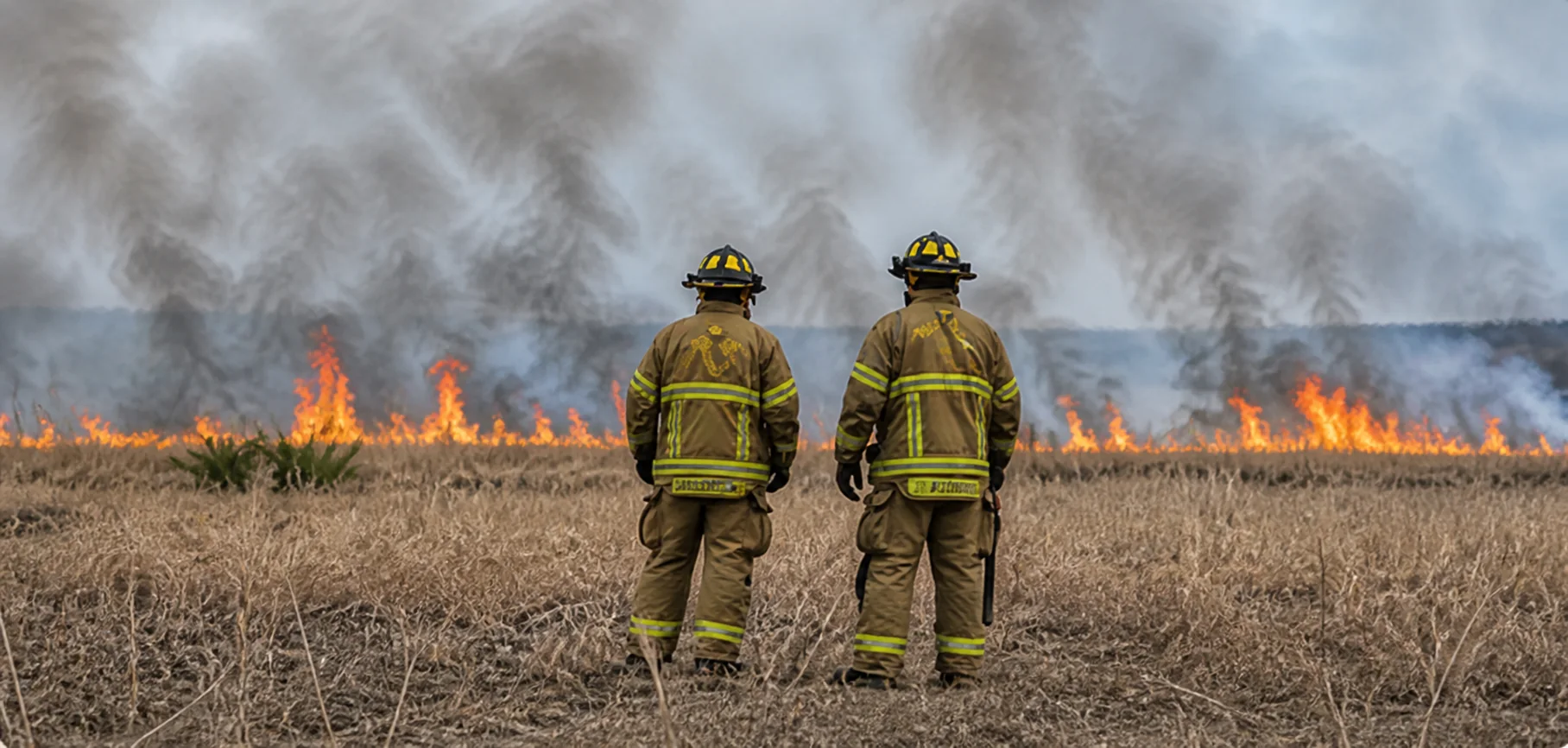


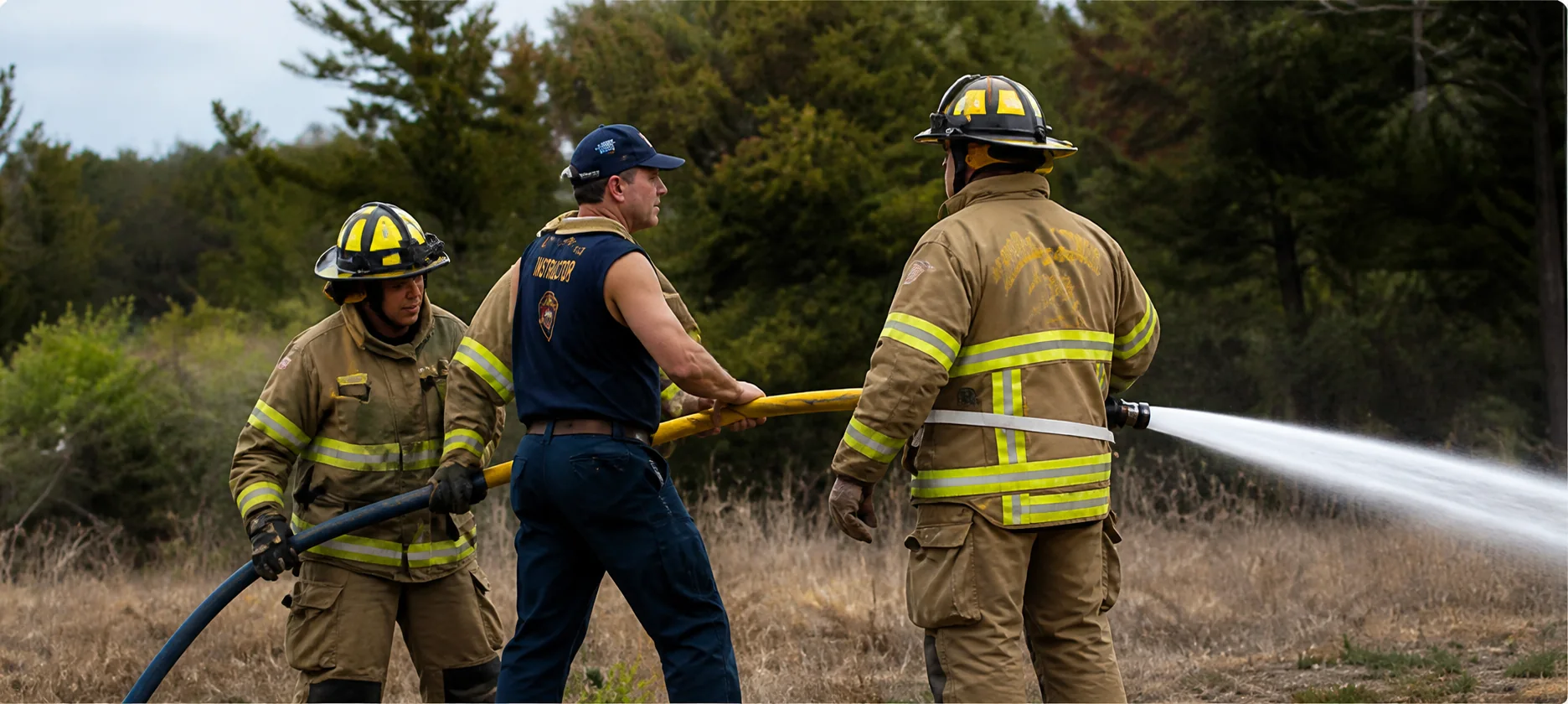
Volunteer firefighter training is what turns a group of neighbors into a crew. At this training night, volunteers ran hands-on hose evolutions, pump operations, and live scenario drills to stay sharp and ready for any call. Training like this keeps our all-volunteer department mission-ready.
What volunteer firefighter training covers
Hose evolutions are the practiced sequences for getting water where it needs to go. First, crews pull lines. Then they advance them and manage pressure as a team. Meanwhile, pump operations put someone at the panel, matching flow and pressure to what the nozzle team needs.
Scenario drills then tie it together. Instead of practicing one skill in isolation, volunteers work a realistic problem from arrival through to knockdown. As a result, communication gets tested too, because the radio traffic matters as much as the hose work.
Why repetition matters so much
On a real call there is no time to think through steps. Everything has to be familiar enough to happen under stress, at night, in gear, with adrenaline running. Repetition is what builds that, and there is no shortcut around it.
Rural departments have a particular reason to drill hard. Because we often arrive with fewer people than a career department would, every volunteer needs to cover more ground. Therefore, training is how a small crew stays effective. The U.S. Fire Administration publishes training and safety resources for exactly this reason.
No experience required
People often assume they need a background in the fire service to join. They do not. All volunteer firefighter training starts from the beginning here, and nights like this one are where that happens. What we actually need is willingness to show up and learn.
Furthermore, gear and training are provided at no cost to you. If that sounds like something you could do, our volunteer page explains how to start. If you would rather support the crew another way, donations help us keep equipment and training current.