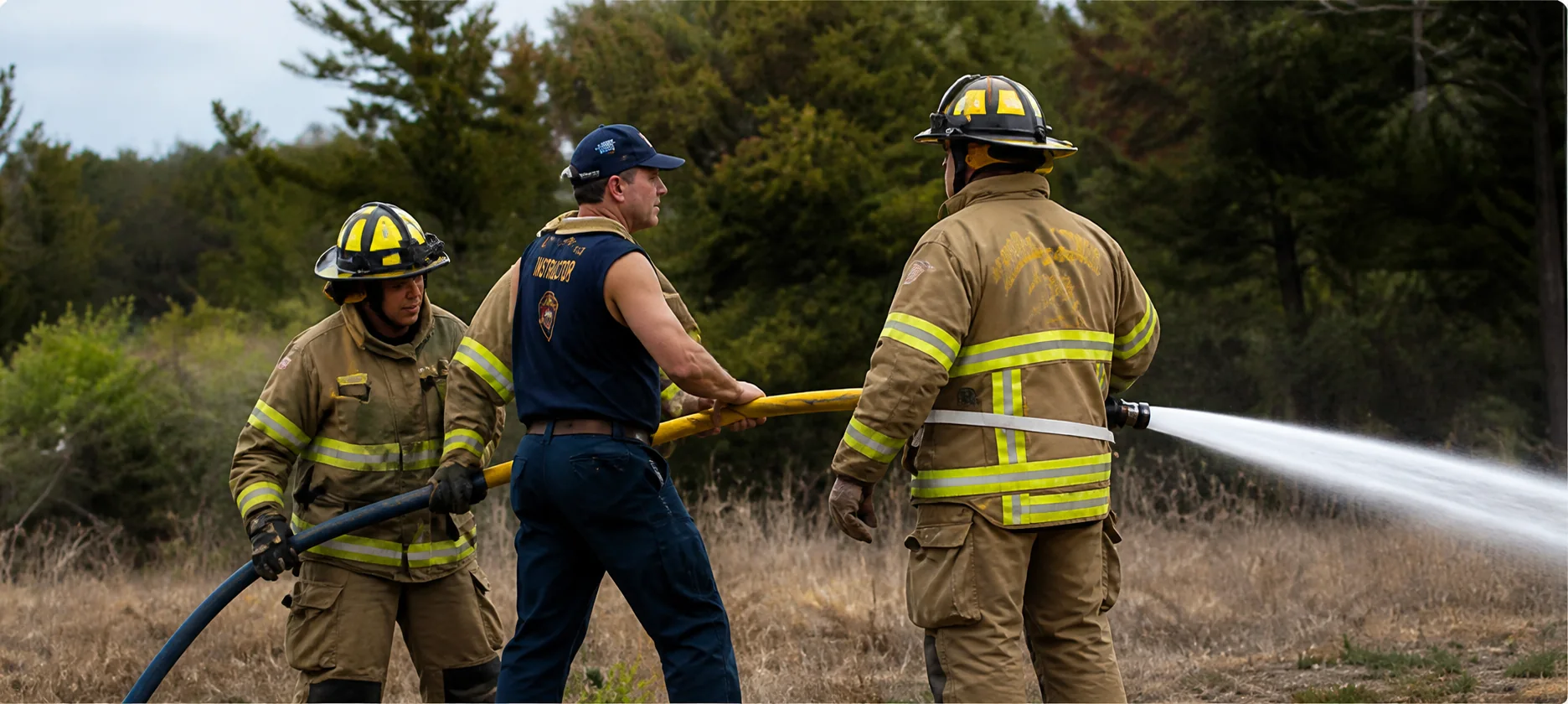


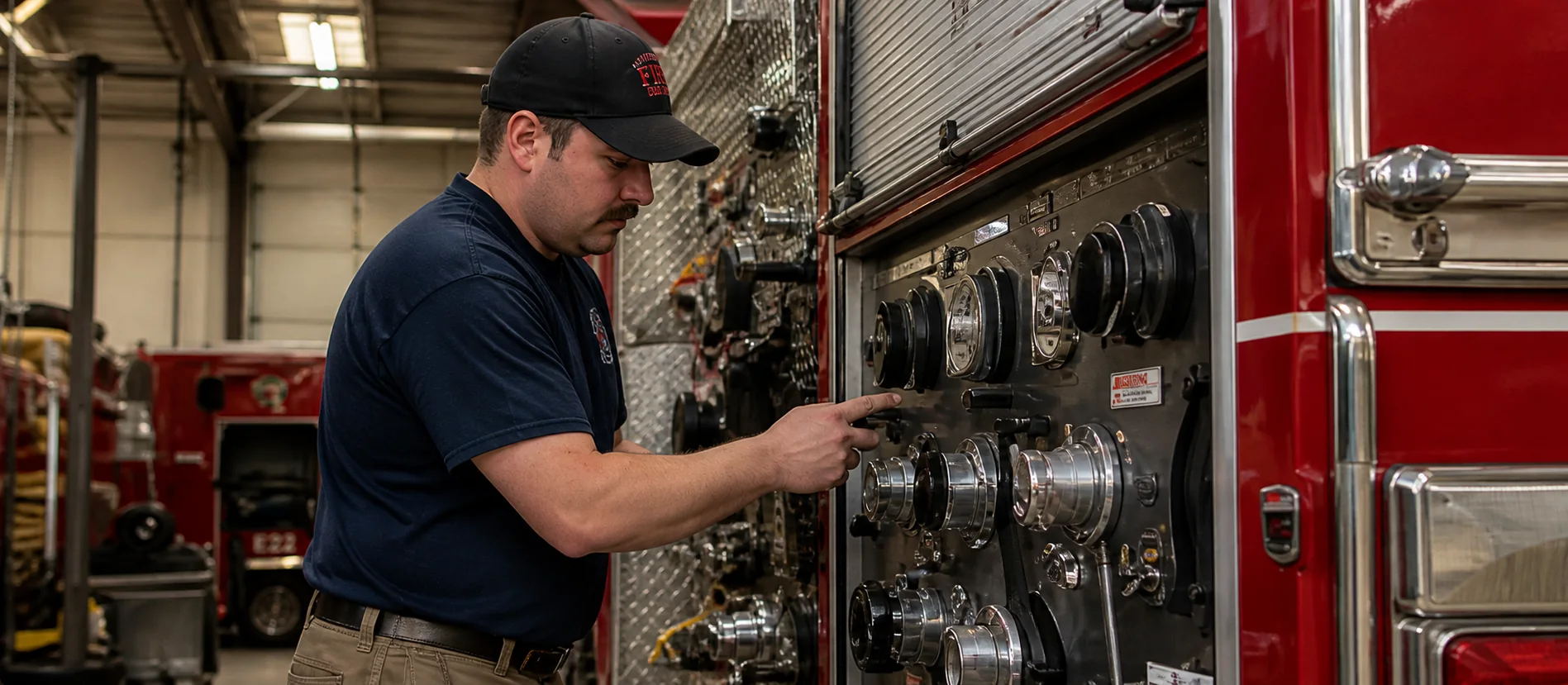
A fire apparatus inspection is one of those routine jobs that decides how a bad night goes. Our crew completed full inspections on new gear and apparatus, checking pump operation, discharges, hose, and SCBA, so everything is ready when the tones drop.
What a fire apparatus inspection covers
Pump operation comes first. The pump has to move water at the pressure a nozzle team expects. So we run it and watch it, rather than assume. Next come the discharges. A seized valve or a bad gasket is far easier to find in the bay than on a scene.
Hose gets pulled, inspected, and repacked so it deploys cleanly. Then crews check SCBA, the self-contained breathing apparatus. They test cylinder pressure, seal, and regulator function. That gear is what lets a firefighter work in air that would otherwise be survivable for a minute or two.
Why it happens before the call
Equipment failures rarely announce themselves. A stiff valve, a low cylinder, or a small leak all work fine until the moment they matter. So a fire apparatus inspection on a quiet afternoon finds those problems on our terms, not the fire’s.
Because we are volunteers responding from home and work, we cannot troubleshoot on arrival. Whatever is on the truck has to be ready. National standards for apparatus and equipment maintenance, published by the NFPA, exist for the same reason.
How community support keeps us ready
Gear wears out and apparatus ages. In 2025 we were able to purchase new wildland gear and thermal imaging cameras, and we are working toward an additional set of extrication equipment and a new fire truck. Those are community-funded, and that support is what keeps a rural volunteer department capable.
If you would like to help, our donate page lists every way to give. You can also serve with us directly.